Your Survival Knife Is Only as Good as the Person Holding It
A survival knife is the one piece of gear that shows up on every backcountry list, gets tossed in a pack without a second thought, and then sits there completely useless because nobody ever practiced with it. Don’t be that person. The skills that make a knife genuinely valuable in the field — batoning, feathering, field dressing, fire starting — take maybe an afternoon to learn and a lifetime to sharpen. Here’s where to start.
Pick a Knife Worth Learning On
Before you drill any of these skills, you need a blade that won’t let you down. A few things that actually matter:
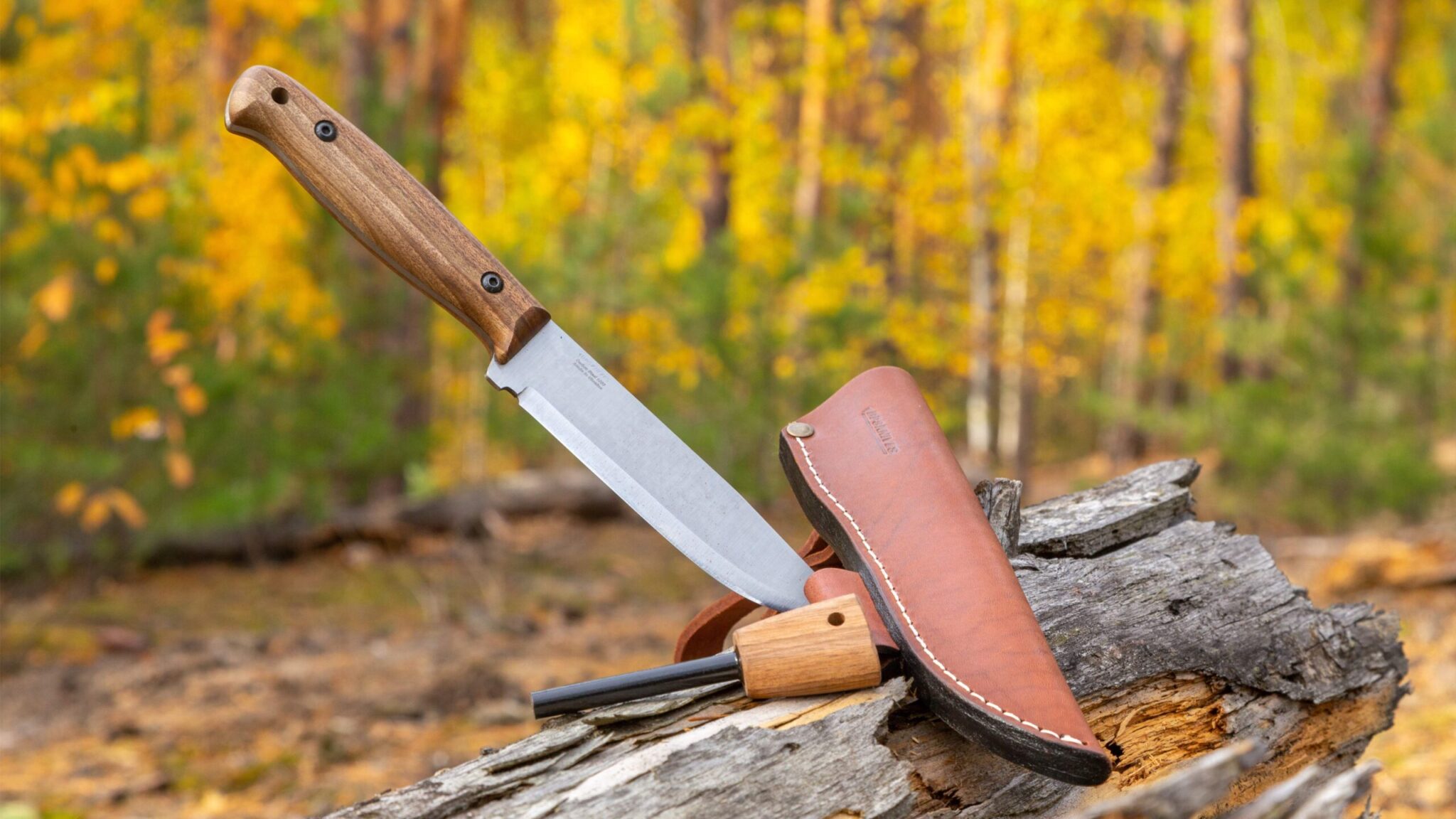
Fixed blade over folding, always. Folding knives are great for EDC. In a survival situation, the pivot point is a liability. A full-tang fixed blade — where the steel runs the full length of the handle — is structurally stronger and far more reliable under hard use.
Four to six inches of blade. Long enough to baton wood and dress game; short enough to control for fine work like feathering tinder. The Mora Garberg and the ESEE-5 are the two most field-tested knives in this category for the money.
High-carbon steel. It takes a finer edge than most stainless, holds it longer under sustained use, and is easier to sharpen in the field with a basic stone. It will rust if you neglect it — keep it lightly oiled and dry.
The Skills That Actually Matter
Batoning: How to Split Wood Without an Axe
Batoning lets you split wood down to manageable pieces for fire-building when you don’t have an axe. Place your blade on the end grain of a log, then drive it through by striking the exposed spine with a heavy stick. Work slowly and deliberately — the knife does the splitting, not you. Use this technique on dead, dry wood only; green wood will fight you, and wet wood will go nowhere.
One caveat: batoning is hard on knives. Ceramic-coated or hollow-handle blades won’t survive it. Stick to full-tang high-carbon steel and you’ll be fine.
Feather Sticking: Your Best Friend in Wet Conditions
When tinder is damp and patience is thin, a well-made feather stick can mean the difference between a fire and a cold, miserable night. Select a dry piece of heartwood — the dense inner wood from a split log is ideal. Brace the stick against a solid surface and make thin, controlled downward strokes with the grain, leaving each curl attached to the stick. Aim for 10 to 15 shavings per stick. Hold the flame to the base and let the curls catch; they’ll hold a spark longer than loose tinder.
Striking a Ferro Rod
Keep the rod close to your tinder bundle — you’re not trying to launch sparks across camp. Use the spine of your knife (not the edge) to scrape firmly down the rod in a single controlled stroke. The goal is a dense shower of sparks directly onto the tinder, not a dramatic arc. Pair this with your feather stick and you’ve got a reliable fire-starting system that works in rain, wind, and cold.
Field Dressing Game
This is a skill worth learning properly from someone who knows it, but here’s the foundational technique: make a shallow incision just below the sternum and extend it toward the pelvis, using just the tip of your blade. The goal is to open the cavity without piercing the intestines. Take your time. Rushing this step ruins meat. Once open, remove the entrails and organs cleanly. Rinse the cavity if you have water. The liver and heart are worth keeping — they’re the most nutritious parts of the animal.
Cleaning Fish
Hold the fish by the tail, spine toward you. Use the back edge of your blade to scrape scales from tail to head in short, firm strokes. Flip the fish and make a shallow cut along the belly from vent to jaw. Open the cavity and remove the guts in one clean pull. Rinse and you’re done. The whole process takes under two minutes once you’ve done it a dozen times.
Keep It Sharp, Keep It Clean
A dull knife is genuinely more dangerous than a sharp one — you compensate by using more force, which means less control. Sharpen your blade before every trip, not after. A simple pocket whetstone (the Lansky Puck is bomber and weighs almost nothing) is all you need in the field. After processing food, rinse the blade with water, dry it completely, and apply a thin coat of oil to the carbon steel. That’s it. A well-maintained knife will outlast you.